Dynamic Currency Conversion (DCC) is a service offered by some merchants that lets you pay in your home currency instead of the local currency. While convenient, it usually involves a less favorable exchange rate and extra fees, often costing you more than if you paid in the local currency and let your bank handle the conversion.
What is Dynamic Currency Conversion (DCC)?
Dynamic Currency Conversion, or DCC, is a payment service. It lets you choose to pay for your purchase in your home country’s currency. Imagine you are in Paris, France.
You buy a souvenir that costs 20 Euros. The cashier might ask if you want to pay in Euros or in US Dollars. If you choose US Dollars, the merchant’s machine will convert the 20 Euros to an estimated US Dollar amount right there at the point of sale.
This seems helpful at first glance. You get to see the price in a currency you understand immediately. You don’t have to wait for your bank statement to see the final cost.
Many travelers like this idea. They think it makes budgeting easier. They want to know exactly how much they are spending in their own money.
However, there’s a catch. The exchange rate used for DCC is rarely the best one. Banks and card networks have their own rates.
These are usually much better for the customer. Merchants who offer DCC partner with payment processors. These processors set the DCC exchange rate.
This rate often includes a markup. This markup is how the merchant or processor makes extra money.
So, while the price shown might look good, it’s often a bit higher than it needs to be. You are paying for the convenience of seeing the price upfront. The actual amount you pay can be significantly more than if you had just paid in the local currency.
It is important to understand how DCC works. It is not always a scam in the illegal sense. It is a service.
But it is a service that often costs the consumer more. The goal here is to make sure you are aware. You can then make a choice that saves you money.
My First DCC Scare
I remember my first trip to London. I was so excited to explore. I had saved up for months.
In a small shop near Buckingham Palace, I bought a lovely tea set. The price tag said 50 British Pounds. When I went to pay, the nice shop assistant asked, “Would you like to pay in Pounds or Dollars today?”
I paused. Dollars sounded easier. I lived in the US.
I knew Dollars. I didn’t want to mess up my budget with weird exchange rates. So, I said, “Dollars, please.” The screen showed a price.
It was around $65. That seemed reasonable for a 50-pound purchase. I paid with my credit card and left the shop feeling happy.
Later that evening, I checked my credit card app. The charge was listed. It was for $70.50.
I blinked. Where did that extra $5.50 come from? I hadn’t spent $70.50.
I had agreed to $65. I felt a knot of worry in my stomach. Had I been tricked?
I spent the rest of the night trying to figure it out. It took a few days and a call to my bank to understand DCC. I learned that the $65 was just an estimate.
The final conversion rate was worse. The shop assistant hadn’t been dishonest, but the service they offered cost me money I didn’t have to spend. That experience taught me a valuable lesson about payment choices abroad.
DCC vs. Your Bank: A Quick Look
The Merchant’s Offer (DCC):
- Price shown in your home currency.
- Rate set by merchant’s processor.
- Often includes a markup (higher cost).
- Convenient for upfront pricing.
Your Bank’s Conversion:
- Price shown in local currency.
- Rate set by your bank or card network.
- Usually a better, fairer rate.
- May have a small foreign transaction fee (check your card).
How Merchants Offer DCC
Merchants offer DCC through their payment terminals or online checkout systems. These systems are connected to specialized payment processors. These processors work with banks that offer DCC services.
When you use your credit or debit card, the terminal asks if you want to pay in your home currency.
The key players are the merchant, the payment processor, and the cardholder. The merchant gets a cut of the DCC fee. The payment processor also makes money.
They are motivated to offer this service because it generates revenue for them. For the customer, the primary benefit is perceived convenience. You see the price in your currency.
Some merchants might be more upfront about DCC than others. Some might even encourage you to choose it. They might say it’s to help you understand the cost.
Others might be less clear. They might just present it as an option without explaining the potential downsides. It is always wise to ask questions.
The actual exchange rate used for DCC is set by the processor. This rate is usually updated daily. It includes the wholesale exchange rate plus a margin.
This margin is the profit. This margin can range from 2% to 10% or even more. So, a purchase that costs 100 Euros might be converted to $110 using DCC.
If you had paid in Euros, your bank might convert it at a rate that makes it $105. The difference is the cost of DCC.
Online, DCC is often seen at the checkout page. You might see the option to pay in your local currency. This is common on international e-commerce sites.
Again, it looks convenient. You don’t have to use a currency converter tool. But the same principles apply.
The exchange rate is likely not the best one available.
DCC Red Flags to Watch For
Too Much Emphasis on “Convenience”: If a cashier or website strongly pushes you to pay in your home currency, be cautious.
Unclear Pricing: If the price in your home currency seems significantly higher than a quick online conversion, it’s a warning sign.
No Option to Pay in Local Currency: Some merchants might try to force DCC by not giving you a clear choice to pay in the local currency.
Confusing Terminal Prompts: If the payment terminal asks you to select your currency in a way that feels tricky, pay close attention.
The Mechanics of Currency Exchange Rates
To truly understand DCC scams, you need to know about exchange rates. There are a few types of exchange rates you might encounter.
First, there is the interbank rate. This is the rate banks use to trade currencies with each other. It is the closest you’ll get to a “true” exchange rate.
This rate fluctuates constantly throughout the day. It is influenced by supply and demand for currencies, interest rates, and economic news.
When you use a credit or debit card abroad, your bank or card network usually uses a rate based on this interbank rate. They might add a small percentage for their services. This is often called a foreign transaction fee.
For example, Visa or Mastercard might use a rate that is very close to the interbank rate. Then, your bank might add a 1% or 3% fee on top of the transaction amount.
Now, consider the DCC rate. The processor offering DCC sets its own rate. This rate is deliberately set higher than the interbank rate.
They add a margin to make a profit. This margin can be substantial. It’s not uncommon for DCC rates to be 5% to 10% worse than the rate your bank would give you.
This means you are paying more for the same item.
Let’s say the real exchange rate is 1 Euro = 1.10 USD. You buy something for 100 Euros. If you pay in Euros and your bank adds a 3% fee, you would pay roughly $110 + $3.30 = $113.30.
With DCC, the processor might use a rate of 1 Euro = 1.15 USD. For your 100 Euro purchase, they might charge you $115. If they also add a fee, it could be even higher.
The convenience of seeing $115 upfront has cost you more than $10 compared to using your bank’s rate. That’s the hidden cost of DCC.
Why DCC Can Be a Scam (Even If Legal)
While DCC itself is not illegal, it can feel like a scam for several reasons. The main issue is transparency. Often, consumers are not fully aware of the extra cost.
The service is presented as a helpful option, not a potentially expensive one.
Lack of True Choice: Sometimes, the way DCC is presented makes it hard to opt out. The payment terminal might default to your home currency, or the cashier might guide you towards it without explaining the fee. You might feel pressured to make a quick decision.
Hidden Markups: The extra cost is baked into the exchange rate. It’s not a separate, clearly labeled fee. This makes it hard to compare DCC pricing with your bank’s pricing.
You only see the final number on the merchant’s screen.
Exploiting Traveler’s Lack of Familiarity: DCC thrives on travelers being unfamiliar with the local currency and current exchange rates. It preys on the desire for certainty. People want to avoid surprises on their bank statements.
Profit for the Merchant/Processor: The core reason DCC exists is profit. The merchant and the payment processor benefit financially. This means they have an incentive to promote it, sometimes at the customer’s expense.
Think about it this way: if you were offered a service that guaranteed you’d see a price in your currency, but it cost you an extra 5-10% on every purchase, would you take it? Most people would say no, if they knew the true cost. That’s why the lack of clear communication around DCC makes it feel deceptive.
Spotting the DCC Trick: A Checklist
- Merchant’s Prompt: Does the cashier or website ask you to choose your currency?
- Price Shown: Is the price shown in your home currency or the local currency?
- Conversion Rate: If shown in your home currency, does it seem unusually high compared to current exchange rates?
- Terminal Display: What does the payment terminal say? Does it clearly state the amount in local currency first?
- Your Card Type: Does your card have foreign transaction fees? (This is separate from DCC but important to know.)
My Experience in an Italian Trattoria
Another time, I was dining in a small trattoria in Florence. The meal was delicious. The bill came, and it was 40 Euros.
The waiter, a very friendly older gentleman, pointed to the card machine. He asked, “Dollars or Euros?”
I had learned my lesson. I immediately said, “Euros, please.” He smiled. He swiped my card.
The machine showed 40 Euros. I entered my PIN. Then, it showed a converted amount in US Dollars.
It was about $45. I knew my bank would probably charge me a small foreign transaction fee. Let’s say it was 3%.
40 Euros at the time was about $44. So $44 plus a 3% fee ($1.32) would be about $45.32.
The DCC amount was $45. It was very close to what I expected. This was a good sign.
It meant the processor wasn’t adding a huge markup. Maybe the merchant simply wanted to give customers an easy option. Or perhaps their processor’s rate wasn’t too aggressive.
However, I still preferred paying in Euros. I wanted the absolute best rate. I thanked him and paid.
Later, I checked my statement. The charge was $44.80. This was even better!
It meant my bank’s rate was excellent. The DCC rate on the terminal was slightly higher, but still very competitive. This showed me that not all DCC is terrible.
But it’s still better to pay in the local currency if you can. You give your bank the chance to give you the best deal.
Who Offers DCC?
DCC is offered by a wide range of businesses worldwide. You’ll encounter it most often in places that have many international visitors.
Tourism Hotspots: Popular tourist destinations are prime areas for DCC. Think of:
- Hotels and resorts
- Restaurants and cafes
- Souvenir shops and duty-free stores
- Attraction ticket booths
- Currency exchange kiosks (though these are different, they often use bad rates too)
Online Retailers: Many international e-commerce websites offer DCC at checkout. This includes online stores selling clothing, electronics, and other goods.
Transportation: Some airlines, car rental companies, and taxi services might offer DCC.
It is important to remember that DCC is offered by many legitimate businesses. They are not necessarily trying to scam you in a criminal way. They are offering a service that benefits them financially.
Your job as the consumer is to understand the cost of that service.
Some card networks, like American Express, have had stricter rules about DCC. They sometimes prevent merchants from using it or require very clear disclosures. However, Visa and Mastercard are more commonly associated with DCC offers.
The specific rules can vary by country and by the issuing bank of your card.
DCC Myth vs. Reality
Myth: DCC always saves me money because I see the price upfront.
Reality: DCC usually costs more due to unfavorable exchange rates and markups. The convenience often comes at a higher price.
Myth: If the merchant offers it, it’s the best rate available.
Reality: The merchant’s rate is set by their processor and is designed to profit them. Your bank’s rate is typically much better.
Myth: DCC is illegal and a form of fraud.
Reality: DCC is a legal service. However, its transparency and pricing can be misleading, making it feel like a scam.
How to Avoid DCC Fees
Avoiding DCC fees is quite straightforward once you know what to look for. The key is to always opt for payment in the local currency.
Here’s how to do it:
- Always Say “No” to DCC: When the cashier or online checkout asks if you want to pay in your home currency, politely decline. Say something like, “No, thank you, I’d prefer to pay in .”
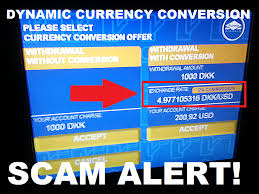
- Be Vigilant at ATMs: ATMs can also offer DCC. When you withdraw cash, if the ATM asks if you want to convert the amount to your home currency, always choose “No” or the option to proceed in the local currency.
- Check Your Payment Terminal: Look closely at the screen of the payment terminal. If it shows a price in your home currency, there’s a good chance DCC is being applied. If it shows the local currency amount, that’s usually the better option.
- Understand Your Credit Card Fees: Before you travel, check your credit card’s policy. Find out if it charges foreign transaction fees. Knowing this fee will help you compare it to the potential cost of DCC. Some cards have no foreign transaction fees, making them ideal for travel.
- Use a Travel-Friendly Card: Consider getting a credit card that offers no foreign transaction fees. Many travel rewards cards offer this benefit. This ensures you get the best possible exchange rate from your bank without added fees.
- Be Wary of Online Checkouts: When shopping on international websites, look carefully at the currency options during checkout. If you see a price in your home currency, see if you can switch it to the local currency. If it’s not an option, consider if the price difference is worth the risk.
It might feel a bit awkward to decline the DCC offer. But remember, you are protecting your own money. The small effort to say “no” can save you a significant amount over the course of a trip.
What if You Accidentally Pay with DCC?
Mistakes happen. If you realize you’ve accidentally paid using DCC, don’t panic. You have a few options, though success is not guaranteed.
Contact Your Bank Immediately: Call your credit card company or bank as soon as possible. Explain that you believe you were charged using Dynamic Currency Conversion and that the exchange rate was unfavorable. Provide details of the transaction, including the date, merchant, and the amount charged.
Dispute the Charge: If your bank agrees that the DCC charge is unfair or that you were not properly informed, they may help you dispute the charge. This is essentially a form of chargeback. Your bank will investigate the transaction.
The Challenge of Disputes: It’s important to understand that disputing DCC charges can be difficult. DCC is a legitimate service. The merchant and processor can often show that they offered you a choice and that the transaction was authorized.
Success depends on how the merchant presented the DCC option and the specific policies of your bank and card network.
Gather Evidence: If possible, try to gather any evidence. This could include photos of the payment terminal screen, receipts that show the local currency amount alongside the converted amount, or notes about your conversation with the cashier.
Learn for Next Time: Even if you can’t get your money back, use the experience as a learning opportunity. Make a note to be extra careful about DCC on future transactions.
Quick Guide: Decline DCC
| At the Point of Sale (Store/Restaurant): | When asked, “Pay in or ?”, always choose . |
| Online Checkout: | Look for a currency selector. Choose the local currency of the seller’s country. If only your home currency is shown, be cautious. |
| ATM Withdrawals: | If asked to convert the withdrawal amount, choose “Decline Conversion” or select to proceed in the local currency. |
Real-World Scenarios and Examples
Let’s look at a couple of common scenarios where DCC pops up.
Scenario 1: The Souvenir Shop in Rome
You’re buying a leather wallet in Rome for 80 Euros. The shopkeeper asks, “Pay in Euros or US Dollars?” You’ve seen prices online suggesting 80 Euros is about $88. The machine shows $95.
You think, “Well, $95 is close enough, and it’s easier.” You agree to pay in dollars. Later, you find out your bank would have charged you $89 for that same transaction. The extra $6 was the DCC markup.
Scenario 2: Booking a Hotel Online
You book a hotel in Tokyo for 20,000 Japanese Yen. The website shows the price in USD as $180. You think, “Great, $180, I can budget for that.” Your bank’s actual rate for 20,000 Yen might be closer to $170.
The website is using DCC. The difference of $10 is the cost of convenience. Even worse, sometimes the USD price shown online might not be the final charged amount.
The actual conversion could be done by your card processor later at a worse rate.
Scenario 3: The Duty-Free Shop at the Airport
You buy a bottle of perfume for 100 British Pounds. The cashier asks, “Pay in Pounds or Euros?” You’re flying home to the US, so you choose Euros. The machine shows 115 Euros.
At the time, 100 Pounds is about 112 Euros. The DCC exchange rate added 3 Euros. If you had paid in Pounds and let your bank convert, you might have paid around $120-$125, which is closer to the true value.
By choosing Euros, you introduced another layer of conversion with a potentially worse rate.
These examples highlight how DCC can sneak into everyday purchases, especially when traveling. The key is to always be aware and choose the local currency whenever presented with the option.
When is DCC Not So Bad?
While it’s generally best to avoid DCC, there are rare situations where it might not be a terrible deal.
No Foreign Transaction Fees: If your credit card has no foreign transaction fees, then paying in the local currency is almost always the best bet. Your bank will likely offer a very competitive rate.
Very Small Markups: In some rare cases, the DCC markup might be very small, perhaps only 1-2%. If you also have a significant foreign transaction fee on your card (say, 3%), then the DCC rate might actually be slightly better or comparable. However, this is uncommon.
Predictable Budgeting: For someone who is extremely budget-conscious and finds it hard to track fluctuating exchange rates, seeing a price in their home currency might offer a sense of control. However, this is more about perceived control than actual savings.
Important Note: Even in these scenarios, it’s still generally safer to opt for the local currency. You are then giving your bank the opportunity to apply its exchange rate. This is usually more transparent than the DCC rate provided by the merchant’s processor.
Your DCC Defense Plan
- Know Your Card: Check for foreign transaction fees.
- Always Opt Local: Choose the local currency at checkout.
- Question Everything: If a price seems too good (or too bad) to be true, ask.
- ATM Caution: Decline conversion at ATMs.
- Review Statements: Check your bank statements for suspicious charges.
The Role of Card Networks and Banks
Card networks like Visa and Mastercard play a crucial role in DCC. They provide the infrastructure that allows DCC transactions to happen. They also set many of the rules and regulations around these transactions.
Visa and Mastercard allow DCC as a service. However, they have implemented rules to try and protect consumers. These rules often require merchants to clearly disclose that DCC is being offered and to show the amount in both the local currency and the cardholder’s currency before the transaction is completed.
They also require that the cardholder has the right to choose which currency to pay in.
Your bank, the issuer of your credit or debit card, is the entity that actually performs the currency conversion if you choose to pay in the local currency. They use their own set of exchange rates, which are typically based on wholesale market rates. Banks make money on currency conversions through the spread between their buying and selling rates, and sometimes through foreign transaction fees.
It’s a complex ecosystem. Merchants, payment processors, card networks, and banks all have a stake in how transactions are handled. Your best defense is to understand your options and to always choose the path that is most likely to give you the best exchange rate, which is almost always paying in the local currency.
When to Worry Most About DCC
You should be extra cautious about DCC in these situations:
High-Value Transactions: The higher the purchase amount, the more money DCC can cost you. A small markup on a $10 item is barely noticeable, but on a $1,000 item, it can add up to $50-$100 or more.
When the Offer Seems Too Good to Refuse: If a merchant is very insistent or makes DCC sound like an amazing benefit, it’s a sign to be suspicious. They have a financial incentive to get you to agree.
If You Don’t Understand the Exchange Rate: If you are unsure about the current exchange rate and don’t have a way to quickly check it, you are more vulnerable to being overcharged by DCC.
When You’re Tired or Rushed: Traveling can be exhausting. You might be less likely to pay attention to the details of a transaction when you’re tired or in a hurry. This is exactly when merchants might try to push DCC.
The key is to be an informed consumer. Always take a moment to think before you swipe your card. Ask yourself: “Am I being offered the best possible exchange rate?” The answer is usually found by choosing the local currency.
Frequently Asked Questions about DCC
What is Dynamic Currency Conversion (DCC)?
DCC is a service that lets you pay in your home currency instead of the local currency when traveling or shopping online internationally. The exchange rate is set by the merchant’s processor and usually includes a markup, making it more expensive than letting your bank convert the currency.
Is DCC a scam?
While DCC is a legal service, it often feels like a scam because the exchange rates are unfavorable and the extra cost is not always clearly disclosed. Merchants and processors profit from DCC, often at the consumer’s expense.
How can I avoid DCC fees?
Always choose to pay in the local currency of the country you are in. Politely decline any offer to pay in your home currency at the point of sale or online.
What happens if I accidentally pay with DCC?
If you realize you’ve paid with DCC, contact your credit card company or bank immediately. You may be able to dispute the charge, but success is not guaranteed.
Does my credit card company charge extra for DCC?
Your credit card company may charge a foreign transaction fee if you pay in the local currency. However, this fee is usually less than the markup from DCC. When you opt for DCC, the higher exchange rate from the merchant’s processor is the primary cost.
Are DCC offers common on online shopping sites?
Yes, many international e-commerce websites offer DCC at checkout. They may show you prices in your home currency to make the purchase seem easier, but it often leads to higher costs.
Should I choose my home currency or local currency at an ATM?
Always choose to withdraw cash in the local currency. If the ATM offers to convert the amount, decline the conversion. This ensures you get the best exchange rate from your bank.
Final Thoughts on Smart Spending Abroad
Navigating currency conversions when traveling or shopping internationally can be tricky. Dynamic Currency Conversion is a service that often sounds helpful but can quietly eat away at your budget. By understanding how DCC works and being vigilant at the point of sale, you can easily avoid its hidden costs.
The golden rule remains simple: always choose to pay in the local currency. This small but powerful habit ensures you get the fairest exchange rate possible from your bank. It puts you in control of your spending and protects your hard-earned money from unnecessary fees.
Happy and smart travels!