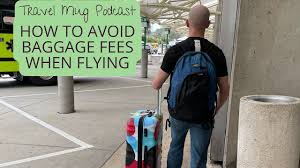
To avoid baggage fees, understand airline size and weight limits for carry-on and checked bags. Choose flights and ticket classes that include free baggage. Pack only essentials and use lightweight luggage.
Consider airline loyalty programs for perks. Weigh your bags at home to avoid overweight charges. Sometimes, packing strategically can mean not checking a bag at all.
Understanding Baggage Fees: What’s Going On?
Airlines make a lot of money from baggage fees. It’s a big part of their income now. They say it helps keep base ticket prices lower.
But for many travelers, it just feels like an extra cost. These fees can change often. They depend on the airline, where you’re flying, and your ticket type.
Knowing the rules is your first step to avoiding them. It’s not a secret code, just a set of policies you can learn.
Different airlines have different rules. Some are stricter than others. For example, low-cost carriers often charge for everything.
This includes carry-on bags that don’t fit under the seat in front. Major airlines might let you bring a larger carry-on. But they will definitely charge for checked bags.
The fees also go up for second bags or overweight bags. It can get confusing fast if you don’t know what to look for.
Why do these fees exist? Well, every bag adds weight to the plane. More weight means more fuel used.
Airlines argue that charging for bags helps cover these extra costs. It also lets them offer cheaper base fares. This attracts budget-conscious travelers.
For them, it’s a way to let you pay only for what you use. But for travelers, it means careful planning is a must.
Packing Smart: Your First Line of Defense
The best way to avoid fees is often to bring less stuff. This sounds simple, but it’s harder than it looks. We tend to pack things we might need.
Think about where you’re going and what you’ll actually do. Lay out everything you want to take. Then, try to cut that pile in half.
You’ll probably be fine with less.
Use lightweight luggage. Your suitcase itself has a weight. A heavy bag means you have less allowance for your actual belongings. Look for bags made of nylon or polyester.
They are lighter than hard-shell cases. Many bags are designed to be very light but still strong. Weigh your empty suitcase at home.
This way, you know your starting weight.
Roll your clothes. Folding can create bulk. Rolling clothes saves space and can reduce wrinkles. It lets you pack more into your bag.
This means you might be able to fit everything into a carry-on. This is a huge win for avoiding checked bag fees.
Wear your bulkiest items. That big jacket or those heavy boots take up a lot of room. Wear them on the plane. It’s a common trick, and it works.
It makes a big difference in how much you can fit into your smaller bags. Think of it as wearing your luggage. You can always take layers off once you’re on board.
Carry-On vs. Checked Bag: What to Know
Carry-On Bag: Fits in the overhead bin or under the seat. Usually has size limits. Most airlines allow one carry-on bag and one personal item (like a purse or laptop bag).
Checked Bag: Goes in the cargo hold. Subject to weight and size limits. Fees apply for these bags on most airlines.
Key Tip: Always check the specific airline’s rules. They vary widely!
Multi-purpose items are your friends. Can one item serve two purposes? For example, a scarf can be an accessory or an extra layer. A sarong can be beachwear or a skirt.
Pack smart by choosing items that do double duty. This reduces the number of individual items you need.
Travel-sized toiletries. Buying full-sized shampoo and conditioner means extra weight and bulk. Stick to travel sizes. Or, consider solid toiletries like shampoo bars.
They don’t count as liquids and save space. Many drugstores sell these. You can also get small reusable containers for your favorite products.
Choosing the Right Ticket and Airline
Not all tickets are created equal when it comes to baggage. Some fare types include free checked bags. Others do not.
This is a key area to investigate before you book.
Economy vs. Premium. Basic economy fares are the cheapest. But they often come with strict baggage rules.
They might even charge for a carry-on bag. Standard economy fares are often better. They usually include one free carry-on.
Sometimes they even include a checked bag, especially on international flights.
Airline types matter. Budget airlines like Spirit or Frontier are known for charging for almost everything. They might have a very low base fare, but those fees add up. Legacy carriers like Delta, American, or United are generally more generous.
They often include a carry-on and sometimes a checked bag in their standard fares. But always check!
Airline Baggage Fee Breakdown (Example)
Airline X (Budget Carrier):
- Carry-on Bag: $35 – $60
- Checked Bag (1st): $45 – $70
- Checked Bag (2nd): $70 – $100+
Airline Y (Major Carrier):
- Carry-on Bag: Free
- Checked Bag (1st): $30 – $40
- Checked Bag (2nd): $40 – $50+
Note: Prices vary by route and time of booking.
Loyalty programs are your friend. If you fly with the same airline or alliance often, join their loyalty program. As you earn status, you get more perks. These often include free checked bags.
Elite members can usually check bags for free. Sometimes they can bring along a guest with free bags too. It’s worth signing up even if you don’t fly often.
Credit cards can offer perks. Many airline-branded credit cards offer free checked bags as a benefit. Some even give you a free carry-on. This can save you a lot of money over a year of travel.
Check the benefits of travel credit cards. Make sure the annual fee is worth the savings for you.
Consider the destination. Sometimes, international flights are different. Many airlines include one or even two checked bags for free on long-haul international routes. This is to compete with other carriers.
If you’re flying overseas, check the policy for international travel specifically. You might get lucky and have your bags covered.
Navigating Size and Weight Limits
This is where many travelers get caught out. Airlines have very specific rules about bag dimensions and weight. And they enforce them.
Ignorance is not bliss here; it’s expensive.
Know the exact dimensions. Don’t guess. Check the airline’s website for their carry-on and checked bag size limits. They usually give measurements in inches (e.g., 22 x 14 x 9 inches).
Make sure your bag fits these. Many carry-on bags are slightly larger than the limit. This causes problems at the gate.
Use a measuring tape. When you buy a bag, measure it. Make sure to include wheels and handles. They count towards the total size.
If you’re unsure, measure your bag against the airline’s requirements before you leave home.
Carry-On Size Checker
Airline Standard Carry-On Dimensions (Approximate):
- Height: 22 inches
- Width: 14 inches
- Depth: 9 inches
Remember: This includes handles and wheels. Always verify with your specific airline!
Weight limits are critical. Most checked bags have a weight limit, often around 50 pounds (23 kg). If your bag is over this, you’ll pay an overweight fee. These fees can be substantial.
Some airlines even have a hard limit, like 70 pounds. Bags over this might not be accepted at all.
Weigh your bags at home. Get a luggage scale or use a bathroom scale. Step on it alone, then with your bag. Subtract your weight from the total to find your bag’s weight.
Do this for every checked bag. This way, you can rearrange items if needed before you get to the airport.
Distribute weight evenly. If you have multiple bags, try to distribute the weight. If one bag is getting heavy, move some items to another. This can help you avoid overweight fees on a single bag.
Aim to have all your bags well under the 50-pound limit if possible.
Strategies for Avoiding Checked Bag Fees
Checked bags are often the biggest fee culprits. Here’s how to minimize or eliminate them.
Master the carry-on. This is the ultimate goal. If you can fit everything you need into a carry-on and a personal item, you win. It requires discipline.
Plan your outfits. Choose versatile pieces. Think about what you truly need, not what you might want.
Be a smart shopper for luggage. Invest in a good quality, lightweight carry-on bag. Make sure it meets airline size requirements. A well-designed carry-on can hold more than you think.
Look for bags with lots of compartments. They help with organization.
Utilize the personal item allowance. Most airlines let you bring a personal item. This is usually something like a backpack, a laptop bag, or a large tote. Use this for your essentials: medications, electronics, important documents, and anything fragile.
It can also hold a few extra clothing items if needed.
Personal Item Ideas
Backpack: Great for everyday use and can hold a lot.
Laptop Bag: Ideal if you’re traveling for work or need your computer.
Large Tote Bag: Versatile for shopping or carrying extra essentials.
Important: This item must fit under the seat in front of you.
Consider packing cubes. These zippered fabric containers help compress your clothes. They also keep your bag organized. You can pack more efficiently.
It makes it easier to find what you need without unpacking everything.
Think about laundry. If you’re traveling for a longer trip, can you do laundry? Most hotels have laundry services, or you can find local laundromats. Packing for fewer days and washing clothes can significantly reduce the amount you need to bring.
This makes fitting into a carry-on much more achievable.
Overweight Bag Strategies
Even with careful planning, you might find yourself with an overweight bag. Here’s what to do.
Know the fees. Overweight fees are usually much higher than standard checked bag fees. They can be $100 or more per bag. Some airlines won’t take bags over a certain weight (e.g., 70 lbs).
Always check these limits.
Shift items to another bag. If you have two checked bags and one is overweight, move some items to the lighter one. Even a few pounds can make a difference. If you only have one bag, see if you can move heavy items to your carry-on or personal item.
Wear heavy items. Again, wearing your heaviest items helps. Shoes, jackets, and even books can add significant weight to a bag. Wear them on the plane.
This is a simple but effective trick.
Ship items ahead. For very long trips or if you must bring a lot of gear, consider shipping some items to your destination. Companies like Luggage Forward or UPS can send your bags ahead of you. This can sometimes be cheaper than paying multiple overweight fees.
It also means you don’t have to lug heavy bags through the airport.
Overweight Bag Action Plan
At Home:
- Weigh all bags carefully.
- Rearrange items if needed to balance weight.
- Wear heaviest clothing/shoes.
At the Airport (if overweight):
- Ask if you can shift items to carry-on.
- Check if shipping is an option for very heavy items.
- Be prepared to pay the fee if unavoidable.
Consider buying items at your destination. If you absolutely need something heavy or bulky, like a large bottle of sunscreen or a specialized piece of equipment, and it’s not worth shipping, maybe buy it when you get there. This is especially true for things you might only use once or twice.
When Baggage Fees Are unavoidable (Or Almost)
Sometimes, despite all your efforts, you might still face baggage fees. This is especially true if you’re flying very basic economy on a budget airline.
Factor fees into your budget. If you know you’ll have to pay, budget for it. See if the cost of the flight plus fees is still cheaper than another option. Sometimes, a slightly more expensive ticket on a different airline might be cheaper overall if it includes bags.
Be aware of “hidden” fees. Some airlines might charge for things you don’t expect. For example, a carry-on that’s too big might be checked at the gate for an extra fee. Or certain types of sports equipment might have their own fee structures.
Always read the fine print.
Look for deals. Airlines sometimes have promotions or sales. Keep an eye out for these. You might find a flight where baggage is included, or the fees are waived for a limited time.
Signing up for airline newsletters can help you stay informed.
Baggage Fee Myths vs. Reality
Myth: All airlines charge the same for bags.
Reality: Fees vary wildly by airline, route, and fare type.
Myth: You can always sneak a slightly oversized bag on.
Reality: Gate agents are trained to spot them, and fees can be high.
Myth: Bringing an extra small bag is always free.
Reality: Many airlines charge for “personal items” that exceed limits or are too numerous.
Negotiation is rarely an option. At the airport, the agents have a job to do. They are following policy. Arguing about fees is usually not effective and can make things more awkward.
It’s better to be prepared beforehand.
Consider alternative transport. If you’re driving to your destination, of course, you don’t have baggage fees. For shorter distances, driving might be more cost-effective than flying once you factor in all the fees. This is a big consideration for weekend trips.
Personal Experience: The Gate Agent Scare
I remember one trip years ago, flying out of Denver. It was a tight connection, and I was rushing. I had a slightly oversized carry-on bag.
I’d flown with it a hundred times before. But this time, a gate agent stopped me. She said it was too big for the overhead bin and would have to be checked.
My heart sank. I knew the fee was steep, like $60 back then.
I started to panic a little. I didn’t have that kind of cash readily available. I explained it usually fits.
I pleaded a little. She was firm but not unkind. She told me I could try to stuff it into the sizer bin.
It was a metal cage they used to test bags. My bag was just a hair too big. It wouldn’t go in without forcing it, which I feared would break it or the bin.
Then, I had an idea. I took out my bulky fleece jacket and my thickest pair of jeans from my personal backpack. I stuffed them into my carry-on, zipping it up tight.
Then, I took out my thickest hoodie and put it on. I wore my jeans. The agent watched me.
I zipped up my carry-on, which was now very full. It looked like a stuffed sausage. I then put my arms through my fleece and carried it.
It looked ridiculous. I must have looked like I was wearing half my luggage. But the agent shrugged.
She said it looked like it might fit now. I put it in the sizer. It barely squeezed in.
She let me go. I swear I didn’t breathe until I was at my gate. That was a wake-up call.
Never again would I risk an oversized carry-on without a backup plan!
Frequent Questions About Baggage Fees
Traveler’s Toolkit: Essential Checks
Before Booking:
- Compare total costs (flight + fees) across airlines.
- Check baggage policies for carry-on and checked bags.
Before Packing:
- Measure and weigh your empty luggage.
- Review airline size and weight limits again.
Before Leaving Home:
- Weigh your packed bags.
- Wear heaviest items.
Can I bring my own snacks on the plane?
Yes, you can bring your own snacks. Most airlines allow non-alcoholic beverages and food items in both carry-on and checked baggage. Just make sure anything liquidy is within the TSA liquid rules for carry-ons (3.4 ounces or less in a quart-sized bag).
Do business class tickets always include free bags?
Generally, yes. Higher fare classes like business or first class almost always include a generous allowance of checked bags, often two or more, and larger carry-ons. It’s a perk of the premium ticket price.
What happens if my carry-on is too big at the gate?
If your carry-on is deemed too large for the overhead bin, the airline will typically check it for you. You will almost always have to pay a gate-checking fee, which is often more expensive than paying for a checked bag in advance.
Are there different rules for different types of bags, like sports equipment?
Yes, often. Items like skis, golf clubs, surfboards, or bicycles usually have specific handling fees and size/weight restrictions that differ from standard luggage. You must check the airline’s policy for these special items well in advance.
Can I combine my carry-on and personal item if one is too full?
No, they are separate allowances. Your personal item must fit under the seat, and your carry-on must fit in the overhead bin. Trying to combine them usually results in your carry-on being treated as a checked bag and incurring fees.
Is there a way to get free checked bags on budget airlines?
Very rarely. Budget airlines make their money on fees. Some might offer it if you purchase their co-branded credit card or reach a very high loyalty status, but it’s not common.
Your best bet is to pack extremely light and use only a personal item.
Final Thoughts on Avoiding Baggage Fees
Dodging baggage fees is all about preparation. It requires a little effort upfront. But the savings are definitely worth it.
Think smart about what you pack. Choose your airline and ticket wisely. Always check the rules before you fly.
By following these tips, you can fly with more confidence. You’ll know you’re not going to get hit with unexpected charges. Enjoy your trip without the baggage fee headache.
Safe travels!